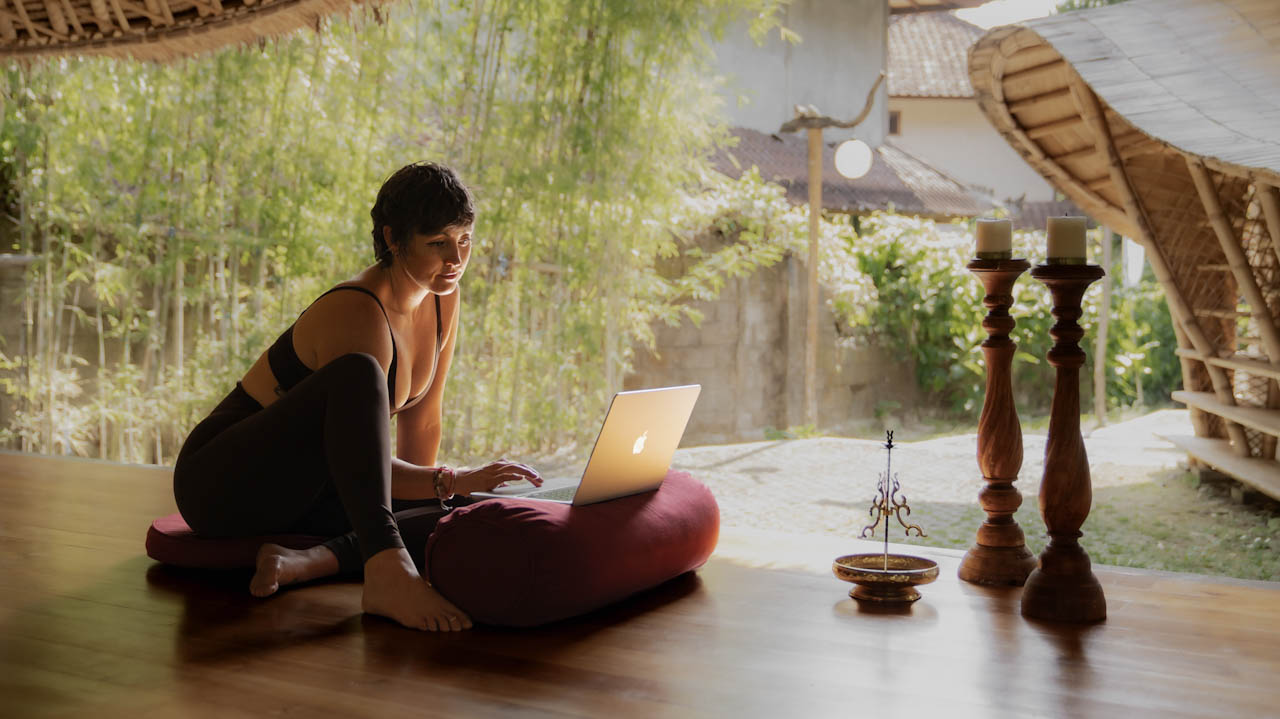

There is a deep, specific sadness that arrives when you're doing something you genuinely love and realise it isn't going to pay your rent.
I'm back in Melbourne. I'm teaching. I love it. I mean that without equivocation: holding space for people is one of the most meaningful things I've ever done. And I'm earning less than I was in my teens.
I want to talk about this honestly, because I think the wellness boom that we're all supposedly living inside has created an economic structure that is extraordinary for investors and product companies and not particularly liveable for the people actually doing the work of holding space, the teachers, the practitioners, the ones whose expertise is what makes any of this possible.
The gap between what wellness promises and what it pays
The conversation about wellness has never been louder. Biohacking. Longevity. Nervous system regulation. Somatic healing. These are not fringe interests anymore, they're mainstream, they're the subject of podcasts with millions of listeners and books that top bestseller lists and retreats that cost as much as a European holiday.
And yet the yoga teacher who guides you through the practice that shifts something real for you on a Tuesday morning is often earning, per hour, less than a barista. The meditation facilitator whose voice you fall asleep to is often working on a revenue share that rounds down to almost nothing. The space holders, the ones with genuine training and genuine depth and genuine care, are often the worst-compensated people in the entire supply chain of your wellness.
This is a structural problem, not a personal one. It's not that studios are malicious. It's that the economics of physical space and class-based teaching are genuinely difficult, and the rates for teachers have not kept pace with the cost of training, the cost of living, or the increasing evidence base for what these practices actually do.
What the digital shift is offering and what it isn't
The rise of apps and online studios has created real opportunity for some teachers. If you build an audience, if you can make content that travels, and if you can run a subscription model or a course, you can earn in ways that physical teaching alone won't cover. That's real. I'm building toward that, and the Contemplations app is part of it. [Explore the Contemplations app →]
But there's a significant gap between this is possible and this is accessible to most teachers right now. Building an online audience takes years. Making content that converts takes skill and infrastructure and time. Most teachers are working full class schedules because they need the income, which leaves almost no time or energy for building the digital presence that might eventually change their income.
The platform model has also created a new kind of dependency, one where teachers build audiences on channels they don't own, under algorithms they can't control, and where the cut taken by the platform means the economics are still genuinely difficult even when the content is succeeding.
What the digital shift is offering and what it isn’t
The rise of apps and online studios has created real opportunity for some teachers. If you build an audience, if you can make content that travels, and if you can run a subscription model or a course, you can earn in ways that physical teaching alone won’t cover. That’s real. I’m building toward that, and the Contemplations app is part of it. [Explore the Contemplations app →]
But there’s a significant gap between this is possible and this is accessible to most teachers right now. Building an online audience takes years. Making content that converts takes skill and infrastructure and time. Most teachers work full class schedules because they need the income, which leaves almost no time or energy to build the digital presence that might eventually change their income.
The platform model has also created a new kind of dependency, one where teachers build audiences on channels they don’t own, under algorithms they can’t control, and where the cut taken by the platform means the economics are still genuinely difficult even when the content is succeeding.
This is the specific problem Ben and I have been working on. OneDome is being built for exactly this gap: practitioners, teachers, and space holders who have something real to offer and need the infrastructure to offer it properly, without the technical barrier, without building on someone else’s terms, without handing over the relationship with their own community to a platform that can change the rules at any time. If that sounds like where you are, we’d love to hear from you. [Get in touch →]
What you can actually do about this, as a student
I’m not writing this to be despairing. I’m writing it because I think most people who love their teachers genuinely don’t know how much the small things matter.
Tell your friends. This is the single most effective thing you can do for an independent teacher. A personal recommendation from someone who trusts them is worth more than any algorithm. Word of mouth is still the most powerful distribution system in the world for a business built on trust.
Engage. Not just to consume but to signal. A comment, a share, a save: these are not just small kindnesses. They are data that platforms use to decide whether your teacher’s work gets shown to more people. Engaging is a form of support that costs you nothing and costs them everything not to have.
Leave reviews. On Google. On the app store. On whatever platform they teach through. Reviews are the currency of trust in a world where most people discover teachers they’ve never met.
Follow them off the platform. If they have a Substack, subscribe. If they have a newsletter, sign up. Owning your relationship with your teacher, rather than having it mediated by an algorithm, protects both of you from the inevitable changes in how platforms decide to work.
And if they’ve created something you use, pay for it. I know this sounds obvious. But in a world where so much content is free, the decision to actually pay for something is genuinely significant, not because teachers need charity but because it tells them their work has value beyond the metrics, and that there are people willing to put actual support behind what they’re building.
The wellness economy is booming. It can be built in a way that works for everyone in it, or it can be built in a way that extracts value from the people at the bottom of the chain while rewarding everyone above them. Which version it becomes depends, in part, on the small decisions that students make about how they show up for the people who help them come home to themselves.
And for the teachers reading this: if you’re ready to build something that’s actually yours, we’re building the place for it, for you.