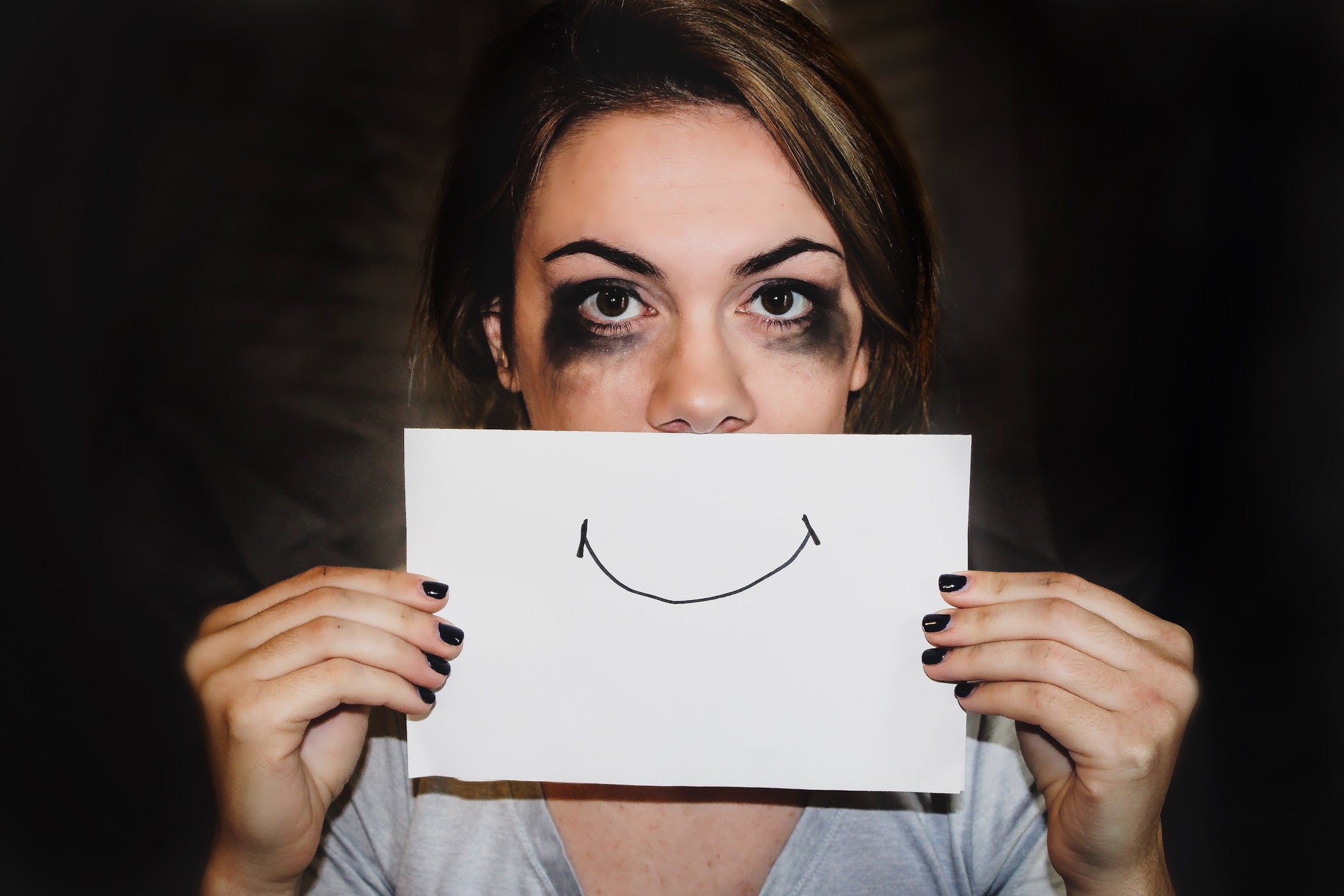

Something happens, a tense message, a raised voice in the next room, a silence from someone who usually replies quickly, and your body responds before you've finished processing it.
Your chest tightens. Or your mind starts accelerating. Or you feel a sudden urge to smooth things over, to say sorry before you've even understood what happened. Or you go quiet and still and slightly absent, as if some part of you has stepped just slightly behind glass.
This is not personality. This is not a character flaw. This is your nervous system doing exactly what it was designed to do: protect you.
The four survival responses, fight, flight, freeze, and fawn, are the body's automatic threat management system. Understanding them doesn't dissolve the responses. But it changes the relationship you have with them. And that can change almost everything.
Where this comes from: a brief history
The fight-or-flight response has been understood since the early twentieth century, when physiologist Walter Cannon described the body's mobilisation under threat. Later, freeze was added to the model, just like when an animal plays dead, we humans go still and quiet in the face of danger.
The fawn response, the pattern of placating, appeasing, and people-pleasing as a survival strategy, was named more recently by therapist Pete Walker, who identified it particularly in people who grew up in environments where expressing anger or distress wasn't safe. If fighting or fleeing would have made things worse, and freezing wasn't enough, learning to pre-emptively meet other people's needs could keep you out of harm's way.
Psychiatrist and researcher Stephen Porges' Polyvagal Theory, developed from the 1990s onward, added significant nuance to this picture. Porges identified not just two but three physiological states in the autonomic nervous system: a ventral vagal state of social engagement and safety, a sympathetic state of mobilisation (fight or flight), and a dorsal vagal state of shutdown and immobilisation (freeze). His work helped explain why the same person can move between states that feel completely contradictory, from anxious and activated to numb and unreachable, sometimes within a single hour.
Fight: when the body prepares to push back
Fight doesn't always look like aggression. It can look like snapping at someone you love. Like defensiveness that arrives before you've consciously registered feeling threatened. Like a tightness in the jaw or shoulders, an inability to back down even when part of you knows the argument isn't worth it.
The physiology is mobilising: heart rate rises, stress hormones flood the bloodstream, attention narrows to the source of threat. The body is preparing for action. The trouble is that most modern threats, the email, the unread text, the conversation that went sideways, don't resolve through physical action. The body is ready to fight something it can't actually fight.
People who default to fight as a primary response often describe it as feeling hijacked, as if a faster, more reactive part of them steps in before the thinking, relational self has had a chance to speak.
Flight: when the body prepares to run
Flight is easier to recognise in its more obvious forms: leaving difficult conversations early, avoiding people or situations that feel threatening, keeping yourself so busy there's no room to feel what's underneath. But it also lives in subtler patterns, the constant scrolling that keeps the present at arm's length, the overworking that prevents you from sitting still with something uncomfortable, the way some people become suddenly very practical and task-focused whenever emotion enters the room.
Physiologically, flight shares the same sympathetic activation as fight. The difference is direction: instead of towards the threat, away from it. For some people, flight is so habituated that the anxiety itself, the tension in the chest, the circling thoughts, is the flight response trying to run somewhere.
Freeze: when the system shuts down
Freeze is the least understood of the four responses, partly because it doesn't look like a response at all. It looks like nothing. Like going blank. Like being unable to speak, move, decide or feel. Like numbness that settles in when things become too much.
In Polyvagal terms, this is the dorsal vagal state, an ancient, primitive shutdown mechanism that the nervous system activates when fight or flight are either impossible or have already failed. It's what happens in some animals when they play dead. In humans it can present as dissociation, emotional flatness, an inability to be present, a quality of watching yourself from outside.
People in a freeze response are often told they're not trying, or not feeling things properly, or being passive. The reality is that the nervous system has concluded that doing nothing, becoming very small and still and absent, is the safest option available.
Fawn: when connection becomes a survival strategy
Fawn is the response that most often gets mistaken for a personality trait. It shows up as the compulsive need to make sure everyone is okay, even at your own expense. As the difficulty saying no, the apologising for things that aren't your fault, the reading of other people's moods and adjusting yourself accordingly before they've said a word.
People who fawn learned, usually early and in environments where they had little power, that their safety depended on managing other people's emotional states. Conflict was dangerous. Disapproval was threatening. So the nervous system adapted: if I can make you happy, I'm safe.
The cost, over time, is a gradual erosion of your own needs, preferences and sense of self. People-pleasing that once kept you safe can leave you, decades later, uncertain of what you actually want or feel, because those signals were repeatedly overridden in favour of attending to someone else.
Which response is yours?
Most of us have a primary response we default to under stress, though the same person can access different responses in different contexts, or move between them as a situation evolves. Someone might fawn first, then freeze when the fawning doesn't work.
Your default response isn't a flaw in your design. It's information about what your nervous system learned was safest, usually a long time ago, in circumstances that no longer apply. The practice is not to eliminate the response but to begin to recognise it, to have just a little more space between the trigger and the reaction, enough to ask: is this what the situation actually needs right now?
That space is cultivated slowly. Through regulation practices, through therapy, through the slow accumulation of experiences that teach the nervous system that safety is possible. But it begins with recognition. It begins with naming the thing.