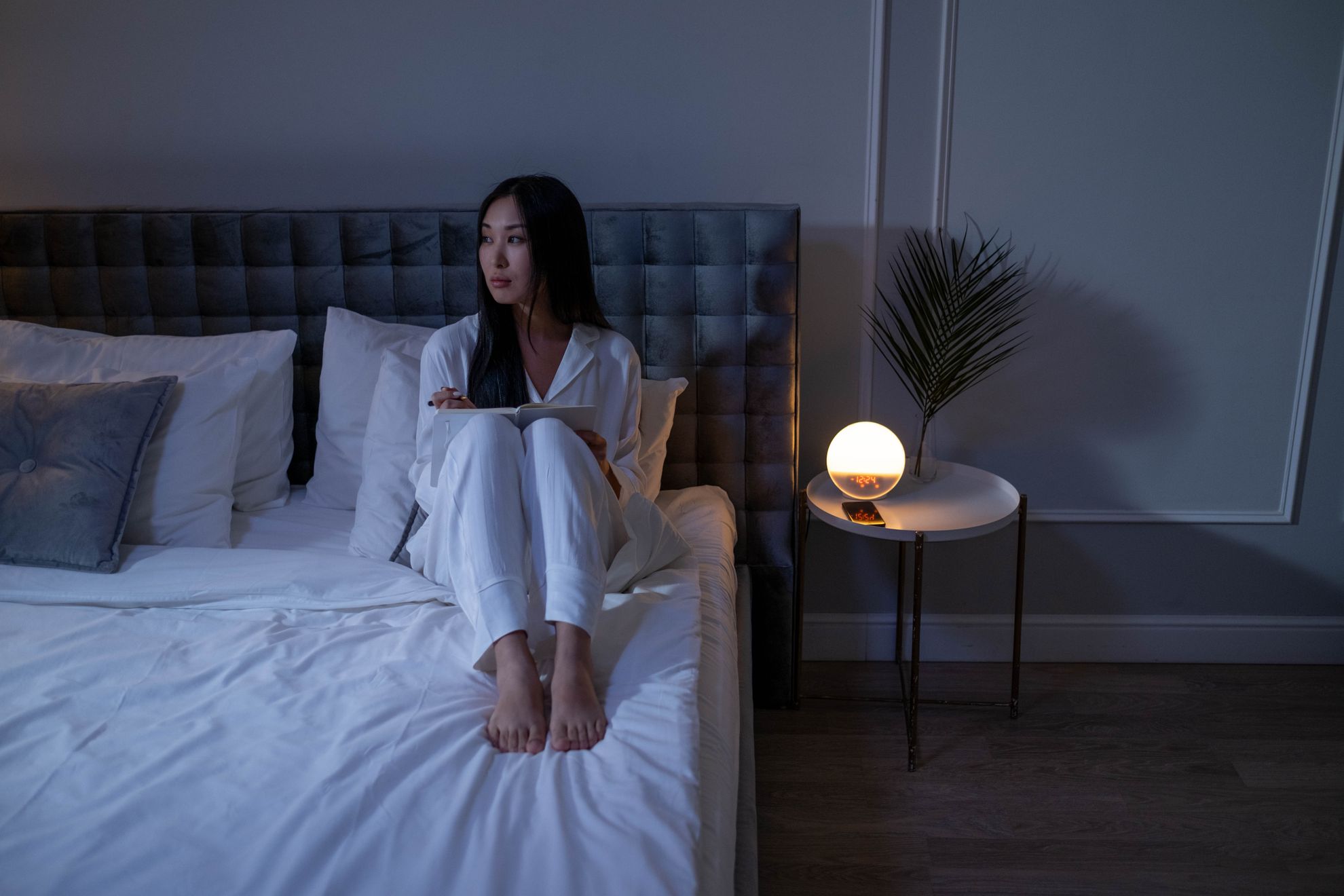
Here is something I didn't understand for most of my adult life: sleep and rest are not the same thing.
I knew what sleep was. I was bad at it for years, lying awake with a running commentary of the day's unfinished business, and I understood that as a problem to solve. But rest, the kind that happens outside of sleep, I had categorised as something between laziness and luxury. Something to feel guilty about or to defer until the to-do list was shorter, which meant indefinitely.
It took burnout, a hospital, and a few years of slowly rebuilding a nervous system that had been running on empty for longer than I'd admitted, to understand that rest isn't the reward at the end of the work. It's the condition that makes the work sustainable in the first place.
What sleep actually does
Sleep is physiological restoration. During sleep the brain clears metabolic waste products that accumulate during waking hours, a process called glymphatic clearance that only happens properly during deep sleep. The immune system does significant repair work. Memory consolidation happens. The nervous system processes the emotional content of the day, which is partly why sleep deprivation makes everything feel harder and more threatening than it actually is.
Sleep is not optional. It's not a lifestyle choice. It's as fundamental as eating and breathing, and the consequences of chronic deprivation accumulate in exactly the same way as chronic nutritional deficiency, slowly and then all at once.
But here's the thing: sleep alone is not enough. Not if you're spending every waking hour in a state of low-grade activation, managing demands, monitoring for threats, producing, performing, responding. Which is most of us right now. The nervous system needs more than the nightly unconscious reset. It needs periodic recovery during the day too.
That's where rest comes in. And that's what most of us are skipping.
What rest actually is
Rest is not the absence of activity. It's the presence of recovery. And it comes in forms that most of us don't recognise as rest because we've been taught, implicitly and explicitly, that only sleep counts.
Researcher Saundra Dalton-Smith identifies seven distinct types of rest that the human system needs: physical, mental, emotional, social, sensory, creative, and spiritual. Most people, when they're exhausted, reach for sleep as the solution without recognising which type of rest they're actually depleted in. Someone who is emotionally exhausted from absorbing other people's stress all week will sleep eight hours and wake up still depleted, because sleep doesn't replenish emotional reserves the way a genuine moment of solitude or meaningful connection does, depending on which the person needs.
Someone who is sensorially overwhelmed, saturated by screens and noise and the constant stimulation of modern life, needs quiet and stillness, not necessarily more hours horizontal in bed.
Someone whose creative energy is depleted needs spaciousness and play, not productivity and output, even if the output is pleasurable.
This matters because when we don't understand what we're actually depleted in, we reach for the wrong recovery. We sleep more and wonder why we still feel tired. We take a weekend off and spend it scrolling, which is rest from work but not from stimulation. We tell ourselves we're lazy when actually we're specifically depleted in one or two of these dimensions and have been ignoring those particular signals for so long.
Why we're so bad at rest
There is a cultural reason and a biological one. The cultural reason is that most of us were raised inside systems that equated productivity with worth. Rest felt like falling behind. Stillness felt like wasted time. The nervous system, which takes its cues from the environment as much as from the body, learned to stay alert because alertness was what was rewarded and what felt safe.
The biological reason is that the nervous system in a chronically activated a state that doesn't transition into genuine rest easily, even when the conditions for it are present. You can sit down, close your eyes, put your phone in another room, and still not be resting, because the system is still running the activation, a pattern it learned to maintain. Rest requires a degree of felt safety, and felt safety requires either a deliberate practice or a downregulation of the nervous system first, or a genuinely safe environment that allows you to soften naturally over time.
This is why the breath practices matter. [The lengthened exhale →] [Bhramari →] Not as performance but as the actual physiological mechanism by which the nervous system receives the signal that it's safe to stop running.
What rest looks like in practice
This is the part I want to be specific about, because I think vague encouragement to rest more is not particularly useful when you don't know what that means in practice.
Physical rest is what it sounds like: the body not being asked to perform. This includes sleep but also includes lying down in the middle of the day, sitting without moving, the deliberate absence of physical demand.
Mental rest is the absence of cognitive load. Not scrolling, which substitutes one form of cognitive input for another. Actual quiet. A walk without a podcast. Sitting with a cup of tea without doing anything else simultaneously. The mind genuinely idle rather than redirected.
Emotional rest is the permission not to manage or perform. For people in caring roles, in service work, in any context where emotional attunement is part of the job, this is one of the most depleted reserves and one of the least replenished. Time alone, time with people who don't need anything from you, time in which you are not responsible for anyone's emotional experience, including your own.
Sensory rest is removing stimulation. Darkness. Quiet. The absence of screens. Time in nature, which provides a specific quality of sensory experience that the research calls soft fascination, gentle enough to allow the attention to recover from the directed focus that most modern environments demand continuously.
Creative rest is the permission to receive rather than produce. Beauty. Art. Music. A piece of writing that moves you. The world experienced rather than managed.
Social rest, paradoxically, can mean either more solitude or more genuine connection, depending on the person. The depleting social interactions are the ones that require performance. The restorative ones are the ones where you can be exactly who you are.
Spiritual rest is the sense of meaning and purpose, the feeling of being part of something beyond the immediate demands of your individual life.
The practical starting point
If you don't know which type of rest you're depleted in, start by noticing what kind of tiredness you're carrying. Is it physical body heaviness? Is it the feeling that your mind has been running too long without a break? Is it the particular flatness that comes from giving too much of yourself to other people's needs? Is it overstimulated, a slightly frantic quality that comes from too much screen time and not enough quiet?
The answer tells you where to start.
And if you're genuinely uncertain, begin with sensory rest. Fifteen minutes of gentle quiet, no inputs, no demands, no scrolling. no sleep. Just the absence of stimulation. Notice what happens in your body in the first few minutes and whether it shifts over the fifteen. That noticing itself is the beginning of learning what your particular system needs.
Rest isn't a reward. It's a requirement. And the version of you that keeps deferring it is not working harder. She's just spending down a reserve that has limits.
[A wind-down practice for overthinkers →] [What is yoga nidra? →] [Explore the Contemplations app →]