Yesterday I attended my second fascia experience. The first was a few weeks ago in a workshop where the idea of fascia was introduced. There are only three people in Victoria holding these sessions, and if you're interested in the body, how it holds tension as well as trauma, this might be for you. My second session was a one-on-one, an opportunity to delve into something specific: the recurring shoulder injury, the headaches, and the way the lines of the body stiffen when the fascia hasn't been opened or hydrated.
Simon, the facilitator, is a yoga teacher I've known for five or so years, and he is what I would call a yoga nerd in the best possible sense. His ability to study and immerse himself in a modality is extraordinary. He learns and learns and learns, and what he can offer in terms of understanding is like nothing I've encountered. Yes, there are incredible teachers I've worked with whose knowledge of yoga feels like six lifetimes, but what makes Simon different is that his modalities stretch wider than the yogic tradition, while still weaving back into the weekly classes he holds, layering them with something more. It's not traditional. It's modern and ancient, woven together into a deep understanding of the body and what it is trying to tell us.
What is fascia and why does it matter
Our bodies are incredible. They're the thing, beyond the planet itself, that we most take for granted. Living cells, all stacked together with energy, allowing you to walk around and experience this life. Without fascia we wouldn't be standing, and we wouldn't be able to communicate with our limbs to tell them what to do.
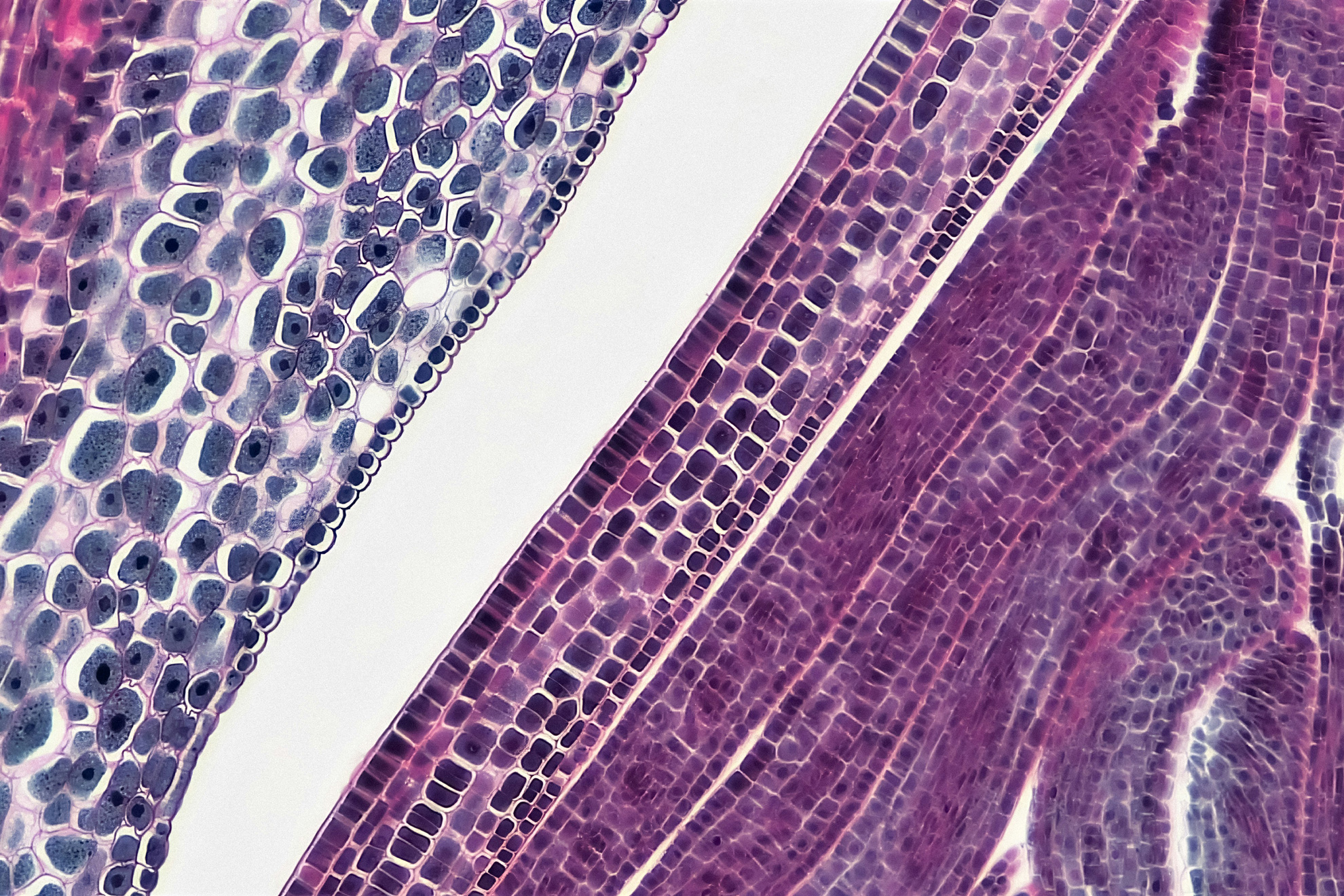
Fascia is a dense web of connective tissue that runs continuously through the entire body, from the umbilical cord in utero all the way out to the surface of the skin. It wraps around muscles, bones, organs and nerves, holding them in relationship to one another. Think of it as the body's fibre-optic network, a continuous, communicating structure rather than just scaffolding. What makes it remarkable is that it isn't inert. It contains its own nerve endings, its own fluid environment, and research by biologist Helene Langevin and others has demonstrated that sustained, gentle pressure on this connective tissue triggers measurable cellular responses, reducing the tension held in myofibroblasts and lowering inflammatory markers associated with chronic stress.
And yet, for much of recent medical history, fascia was largely dismissed. Surgeons cut through it on the way to what they considered the important structures. It was treated as packaging, not as a system with its own intelligence. That's starting to change.
What the research says about fascia and pain
It's worth being honest here, because I think the conversation around fascia can sometimes claim more than the evidence currently supports. The strongest research confirms that fascia is deeply involved in movement, pain, and postural compensation. Studies are also pointing toward the idea that it's the fascia, not just the muscles, that holds patterns of tension and restriction.
The bigger claims, that fascia stores trauma, that working with it releases emotional memory in a direct and reliable way, are more contested. The research is early and the mechanisms aren't fully mapped. I want to be clear about that distinction, because I think honesty about what we know and what we're still working out is part of what makes a practice trustworthy.
What's more likely, given the current evidence, is that something like fascial work operates through a combination of mechanisms: breath regulation, increased interoception, reduced muscular guarding, novel movement patterns, parasympathetic activation, and improved mobility. The practice works, in other words, but probably not through one single dramatic mechanism. It works the way most good somatic practices work, by meeting the nervous system where it is and giving it a different experience.
Fascia and prana: ancient wisdom meets modern science
Here's what struck me as I sat with this: many yoga traditions have been working with these same principles for centuries. They just use different language. In yogic philosophy, prana is the vital force that moves through the body via channels called nadis. Blockages in these channels, called granthis, are understood to create stagnation in both body and mind. The practice of pranayama, asana, and specific movements is, in part, about restoring flow through those channels.
What Helene Langevin is measuring in connective tissue and what a Yin teacher understands about long, held poses targeting the body's deeper lines are describing the same territory through different lenses. The science and the tradition are in the same room. They just arrived through different doors.
This is what I mean when I say that what feels new about fascial work isn't necessarily the movement itself. It's the lens through which it's being explained.
What happens in a fascial manoeuvres workshop
In a workshop setting you're introduced to the idea that you can apply tension to parts of the skin to release the tension held beneath, and when done with breath, it allows the body to soften and open. The way we have moved leaves patterns behind, and the body likes patterns. But sometimes those patterns are the wrong ones.
Take walking, for example. You may be over-compensating on one leg after an injury in childhood. The injury is long past, but the way your body responded to that physical trauma is still embedded in the cells. The same is true for years of making yourself small to fit in or find belonging. It might look like a slightly rounded posture, a perpetual bracing forward, a holding around the chest that arrived before you were old enough to name it.
The body moves in the way that is easiest and most efficient for the patterns it has learned. If those patterns are compensations, the body is working harder than it needs to, and in the wrong directions.
What happens in a one on one fascia session
In a one-on-one the pain points and history of your body are discussed. We talked about the body as a whole system and the emotional responses layered into it. What was happening in my life when I hurt my shoulder, for example? Was it a movement injury, or was it the weight of a new kind of responsibility, the masculine pressure of becoming the breadwinner as my husband started his business? It doesn't matter which it was. What matters is that the body responds in multiple ways, and mine had been delivering the same message through this shoulder every time stress rose.
This is where the research on trauma and the body becomes relevant, even if we hold it carefully. There's strong evidence that the nervous system stores responses to overwhelming experience in physical patterns rather than purely in narrative memory. Van der Kolk's work on body-held trauma, Levine's somatic experiencing, Porges' polyvagal framework, these are all pointing toward the same thing. The body keeps a record of what the mind has moved through. Whether it's the fascia specifically, or the broader somatic system that holds those records, the body-led approach to unravelling them has more support than most conventional medicine has been willing to acknowledge.
We also talked about the pressure system of the body, the fact that we each have to withstand gravity every single day, and for some of us, when internal pressure is added to that, it can feel like too much. Certain fascial manoeuvres can release pressure and soften the fascia at the same time.
After discussing the focal points we worked through a sequence: arm pulls, leg pulls, twisting and pinning the skin against the force of a pull, a jaw release, a temple release, and a belly button release. I know what you're thinking. It is strange. But only socially, not scientifically. And honestly, the social structures we build are a large part of why so many of us are sick and frazzled anyway. For science, I was fascinated.
What I noticed after fascial release work
After the session I felt lighter in a way that's difficult to describe precisely. My shoulder didn't vanish. But there was a quality of ease in the movement that hadn't been there before, something that felt less like a breakthrough and more like a conversation. Like the body had been acknowledged rather than overridden.
I think that's probably the most useful frame for this practice. Not as a proven trauma release technology or a complete healing system, but as a genuine way of attending to the body, with breath, with curiosity, with the willingness to slow down enough to hear what it's actually saying. In that sense it sits comfortably alongside yoga, somatic movement, and nervous system practices, because it operates on the same principle: the body has its own intelligence, and most of us have spent a lifetime not listening to it.
After the session you're given techniques to use at home, to notice the difference in your own time.
Simon McDonald - Vibin High https://www.vibinhigh.com.au/facilitators