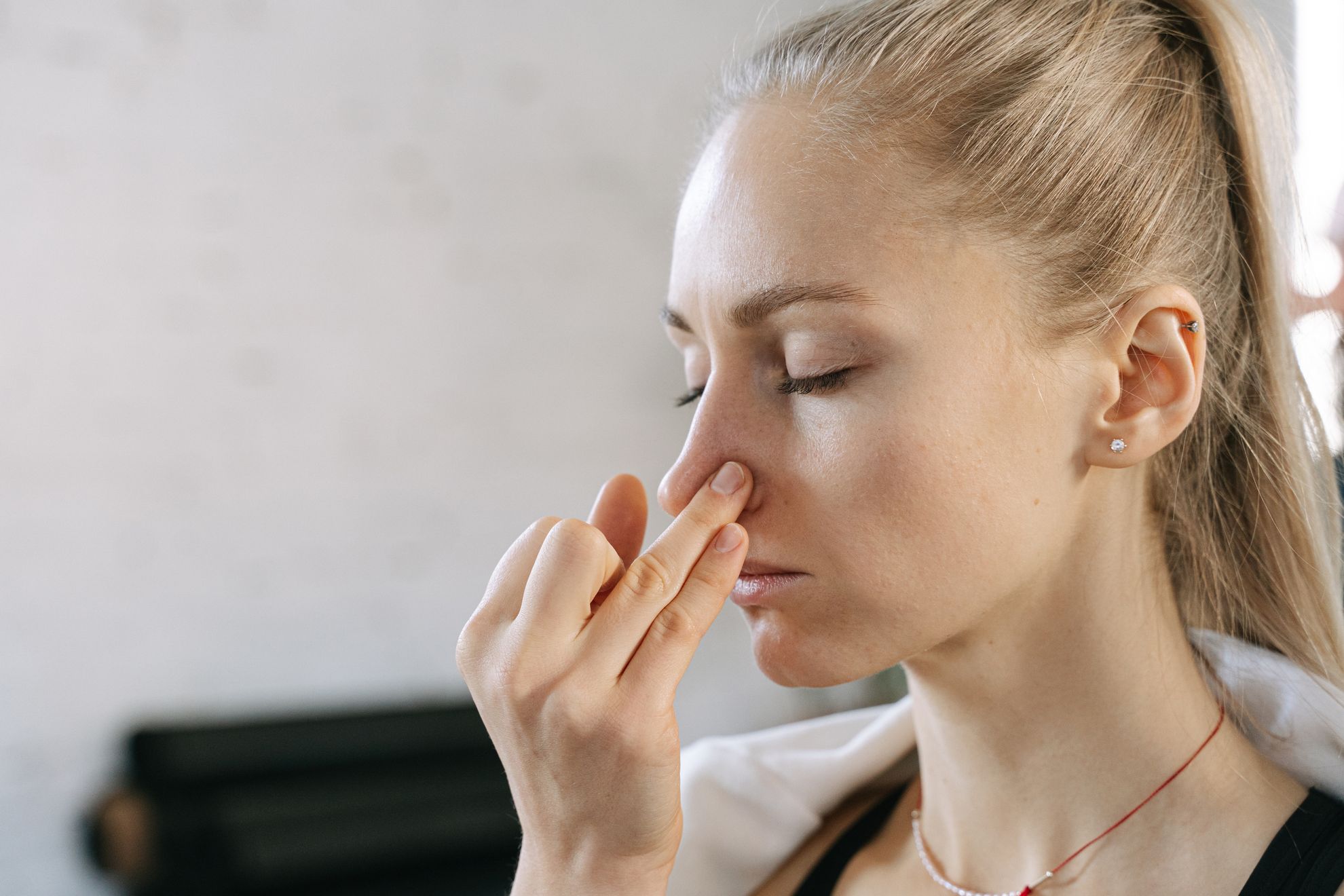
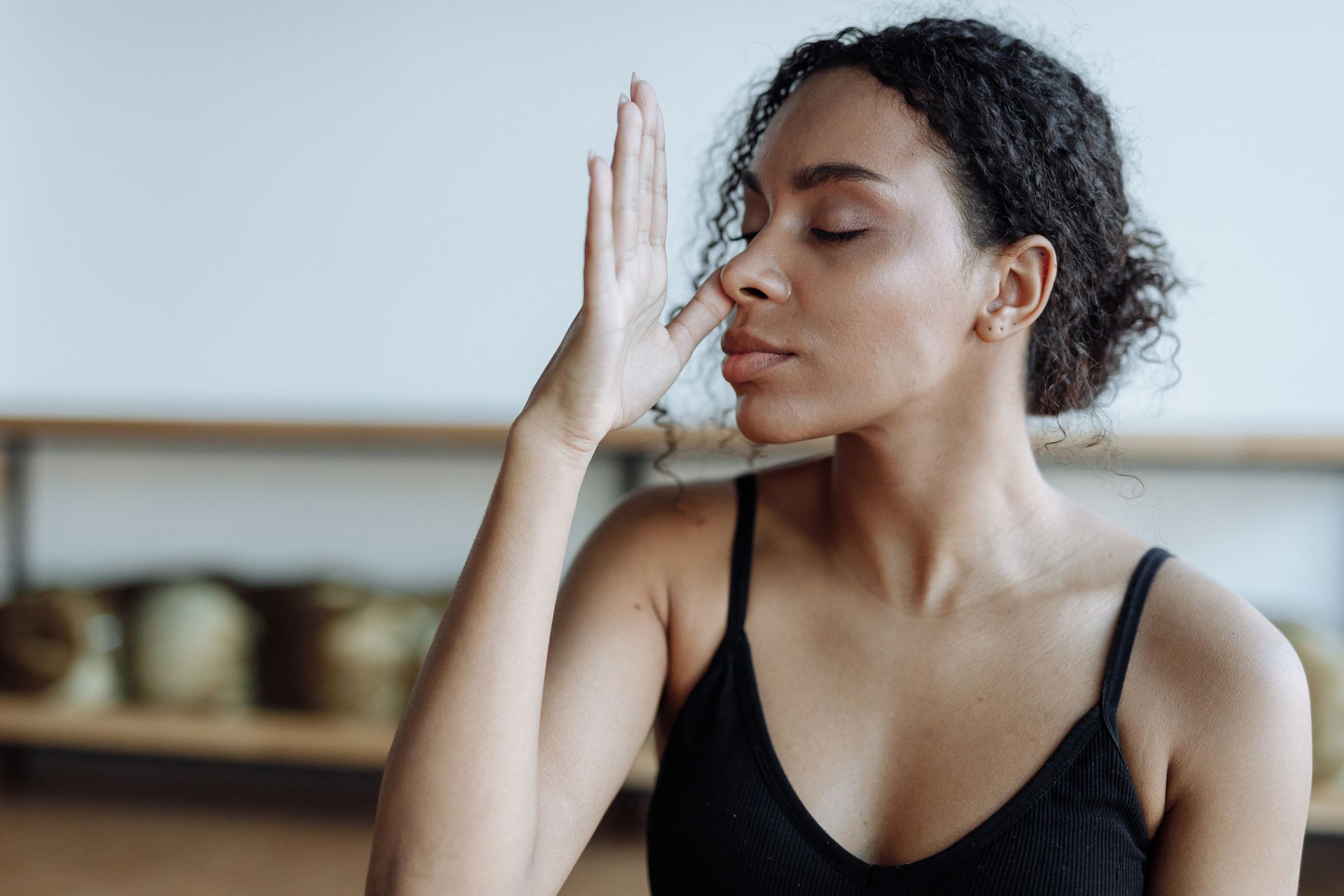
There's a moment in James Nestor's book Breath where he describes how ancient yogic texts documented breathing techniques that Western science is only now beginning to measure and confirm. I remember reading that and feeling something click. Not surprise exactly, more like recognition. Of course they knew. They were paying attention to the body in a way that most of us have stopped doing.
Pranayama is the yogic science of breath. It's the fourth limb of Patanjali's eight-limbed path, which places it after the physical postures of asana and before the internal practices of meditation. That placement is not arbitrary. It reflects something that anyone who has practised pranayama seriously will tell you: the breath is the bridge between the body and the mind, and working with it changes both.
What does Pranayama actually mean?
The word pranayama comes from two Sanskrit roots. Prana means life force, the vital energy that animates the body. It's related to breath but not identical to it: breath is the vehicle through which prana moves. Ayama means extension, expansion, or regulation. So pranayama, literally, is the extension or regulation of the life force through the breath.
In the yogic understanding, prana moves through the body via channels called nadis, the equivalent of the meridian system in Chinese medicine. When prana flows freely and the channels are open, the body and mind function with clarity and ease. When there is stagnation or blockage, the result is felt physically, mentally, and emotionally. Pranayama practices work to clear and regulate this flow.
Now, you can hold this cosmological framework lightly if it doesn't sit naturally with your worldview, and the practices will still work. Because what pranayama is describing at the level of mechanism maps closely onto what modern respiratory physiology and neuroscience are now confirming: that conscious, deliberate breathing directly and measurably affects the autonomic nervous system, the brain, and the body's stress response.
What the research is showing about Pranayama?
The science on breathwork has expanded significantly over the last decade, and it's worth being clear about what it actually supports.
There is strong evidence that slow, rhythmic breathing, particularly breathing that emphasises the exhale, activates the parasympathetic nervous system and reduces physiological markers of stress. Research by Zaccaro and colleagues, published in Frontiers in Human Neuroscience in 2018, found that slow breathing at around six breaths per minute produced significant improvements in autonomic function, mood, and cognitive performance across multiple studies.
Heart rate variability, the variation in time between heartbeats, is considered one of the most reliable markers of nervous system health and resilience. Multiple studies have shown that regular pranayama practice increases heart rate variability, which is associated with better emotional regulation, greater cognitive flexibility, and improved cardiovascular health.
Research has also shown that nasal breathing, which most pranayama practices emphasise, produces nitric oxide in the sinuses, which improves oxygen uptake and has anti-inflammatory effects. The mechanical act of breathing nasally rather than orally affects the nervous system differently, which is part of why pranayama traditions have always insisted on nasal breathing rather than treating it as optional.
What's less established is the specific mechanism behind some of the more subtle experiences practitioners report: the altered states, the emotional releases, the sense of expanded awareness. These are real experiences, well documented across traditions and cultures. The science is still catching up to the mechanism.
The main Pranayama practices and what they do?
Pranayama isn't a single technique. It's a family of practices, each with a distinct mechanism and a distinct effect on the nervous system. The ones you're most likely to encounter are:
The lengthened exhale, the simplest entry point, which activates the parasympathetic nervous system by stimulating the vagus nerve through a longer out-breath. [The lengthened exhale →]
Samavritti Pranayama, or box breathing, which uses four equal phases of breath to create a symmetrical, regulating rhythm that reduces cortisol and improves heart rate variability. [Box breathing →]
Nadi Shodhana, known as alternate nostril breathing (or Anuloma Viloma in traditional texts), which is traditionally understood to balance the left and right channels of the energetic body, and which research suggests may balance activation in the left and right hemispheres of the brain. [Nadi Shodhana →]
Bhramari, the humming bee breath, which uses the vibration of humming on the exhale to activate the vagus nerve and produce an immediate calming effect on the nervous system. It's one of the fastest-acting practices for a racing or agitated mind. [Bhramari →]
Kumbhaka, the breath retention, both at the top of the inhale and the bottom of the exhale, which create specific physiological effects and are considered some of the most potent and advanced practices in the tradition. These are introduced gradually in any serious pranayama training, not attempted independently by beginners.
Why does breath matter now, specifically?
We are, collectively, breathing badly. Decades of chronic stress, sedentary lifestyles, processed food, and habitual mouth breathing have produced a population that breathes too fast, too shallowly, and through the wrong passage. James Nestor's research documents the extraordinary prevalence of sleep-disordered breathing, anxiety driven partly by dysfunctional breath patterns, and the long-term health consequences of habitual over-breathing.
Pranayama doesn't fix all of this on its own. But it offers something that almost nothing else does: a direct, voluntary lever on the autonomic nervous system, available at any moment, requiring no equipment, no prescription, and no particular circumstance. You can use it in the two minutes before something difficult. You can build it into a daily practice that changes your nervous system's baseline over time. You can use it as the preparation for meditation, which is precisely how it's positioned in the eight-limbed path, and where many people find it most transformative.
I've been practising pranayama seriously for a couple of years now, and I've written about what that has actually meant for my body, my moods, and my capacity to move through hard moments. [What 80 hours of pranayama training changed in my body →] I share that piece not as a reminder of credentials but because I think the only honest way to teach something is from the inside of having lived it.
The breath has been here the whole time, available and free and mostly ignored. Pranayama is simply the practice of paying attention to it. And in my experience, that attention changes everything downstream.