
I want to start with something that took me longer to fully believe than it probably should have: the exhale is more powerful than the inhale.
Not more important in the sense of survival; you need both. But in terms of the nervous system's response, the exhale is where the reset happens. The inhale activates. The exhale regulates. And once you understand that, the whole conversation about breathwork becomes a lot simpler.
Why does the exhale work?
The breath and the heart rate are in a continuous conversation. When you inhale, the heart rate speeds up slightly. When you exhale, it slows down. This isn't subtle. It's a measurable, reliable, biological response, and it happens every single breath cycle of every single day whether you're paying attention to it or not.
This response is governed by the vagus nerve, the longest nerve in the body, which connects the brainstem to the heart, lungs, and digestive system. A longer exhale stimulates the vagus nerve, which in turn activates the parasympathetic nervous system, the branch responsible for rest, repair, digestion, and the overall sense that it is safe to be here right now.
Research consistently supports this. A 2017 study in the journal Psychophysiology found that extending the exhale relative to the inhale produced significant reductions in heart rate and self-reported anxiety. The physiological sigh, a double inhale through the nose followed by a long slow exhale, has been studied at Stanford and found to be one of the fastest-acting respiratory interventions for reducing physiological stress in real time.
The body already knows how to do this. It does it spontaneously when a moment of tension passes: the long breath out after something frightening is over, the exhale that comes with "I'm okay." The lengthened exhale practice is just making that response intentional and available whenever you need it, not only when the tension happens to resolve on its own.
How to practice the Lengthened Exhale?
This is genuinely simple, which I know makes it sound less credible. Simple things in wellness are often suspected of not being enough. This one is enough.
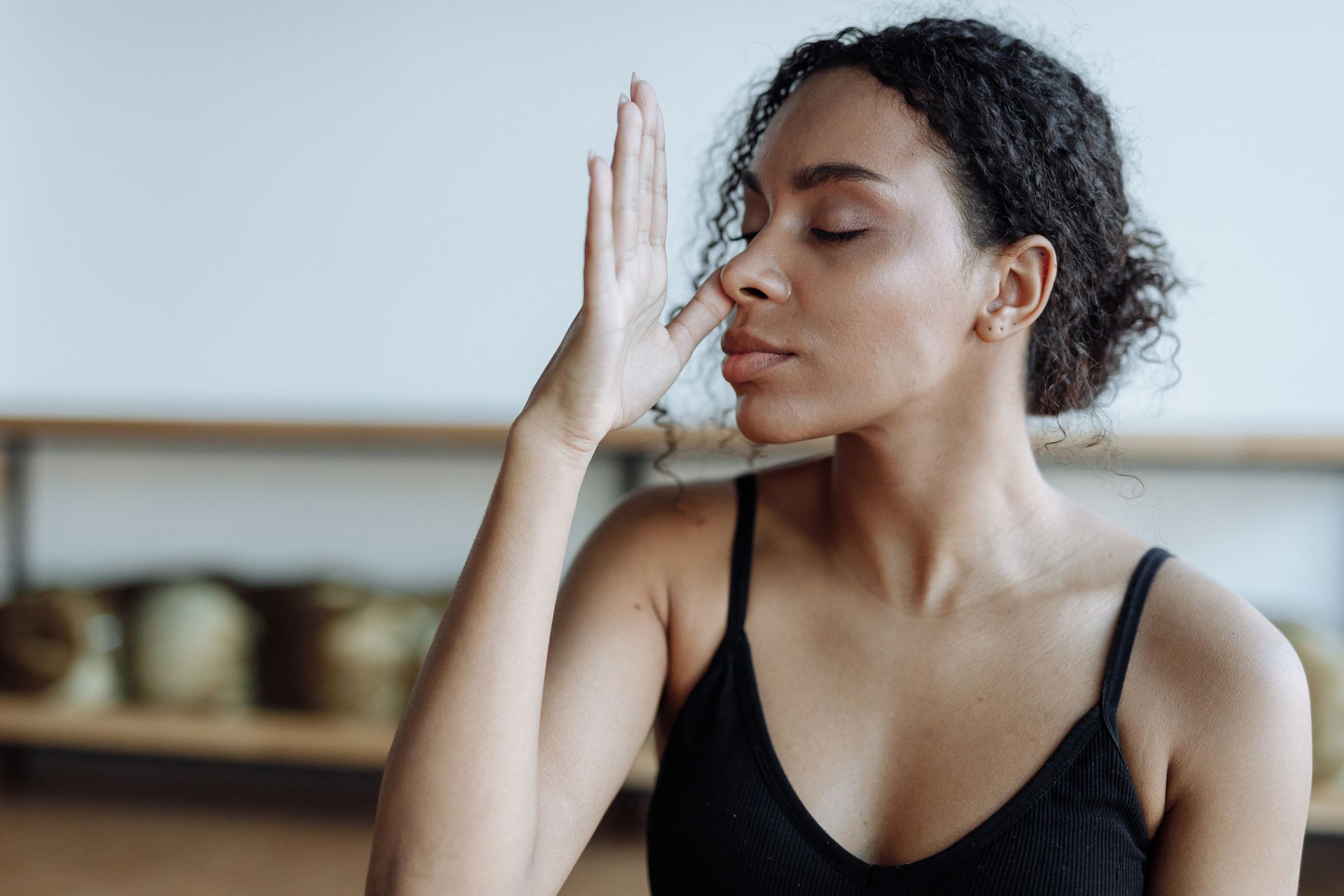
Sit or lie comfortably. Take a normal breath in through the nose. Then exhale through the nose, slowly and completely, making the out-breath noticeably longer than the in-breath. That's it. That's the foundation.
A common starting ratio is inhaling for four counts and exhaling for six or eight. But the count matters less than the quality. The exhale should feel slow, smooth, and complete, as if you're gently emptying rather than pushing out. If it feels forced or tense, soften it. The nervous system doesn't respond to effort here. It responds to ease.
Try four or five rounds and notice what shifts in your chest, your jaw, your shoulders. Most people notice something in the first two rounds. The body responds quickly when you give it what it's asking for.
When to use the Lengthened Exhale?
This is the practice I reach for most often in daily life, not because it's the deepest or most sophisticated thing in my toolkit, but because it's the one that's always available. You can do it in a meeting before you speak. In a car park before a difficult conversation. In the middle of the night when your mind won't settle. In the two minutes before a class you're about to teach when your own nervous system needs to land first.
It works in all of those moments because the mechanism is the same regardless of context: the exhale tells the body the threat is over. And the body, which has been waiting for exactly that signal, responds.
For a more structured practice built around this principle, box breathing (Samavritti Pranayama) extends the concept into a four-phase rhythm that offers a deeper level of regulation. [Box breathing: what it is and how to practise it →] And if you want to understand the broader tradition this comes from, the next piece in this series looks at pranayama as a whole. [What is pranayama? →]
A note on consistency
Like most things that work, this one works better with repetition. A few rounds of lengthened exhale before bed every night for a week will do more for your nervous system than an occasional thirty-minute breathwork session. The body learns through pattern and repetition. Give it the same signal often enough and it starts to anticipate the regulation before you've even begun.
That's not a metaphor. That's how the nervous system actually works.