
We often look to others to decide what we want. We glimpse a moment in their life — a success, a lifestyle, a relationship - and imagine that having what they have will complete something in us. In truth, what we’re seeing is never the full picture. It’s a snapshot lifted out of a much longer, messier, deeply human story.
On social media, this becomes amplified. We see the glow, the highlight, the polished angle. We don’t see the late nights, the doubts, the discipline, or the karmic threads that led someone to where they are.
Take, for example, the yoga teacher who works a few hours a day, has a devoted community, and sells out retreats every year. From the outside, it looks effortless. But we don’t see the years of unpaid teaching, the self-doubt, the heartbreaks, the financial risks, the reinventions, the courage it took to begin again and again.
Or my marriage - one of the things people often comment on when they spend time with us. Some say they want something “just like it.” It’s flattering, but also incomplete. What you see is the stability, the ease, the warmth. What you don’t see are the years of learning each other’s language, the seasons of frustration, the times we lost each other and had to find our way back. A “successful” marriage is not a measure of time spent but of how many endings you’ve navigated together, how many repairs you’ve chosen to make, how many versions of yourselves you’ve held with care.
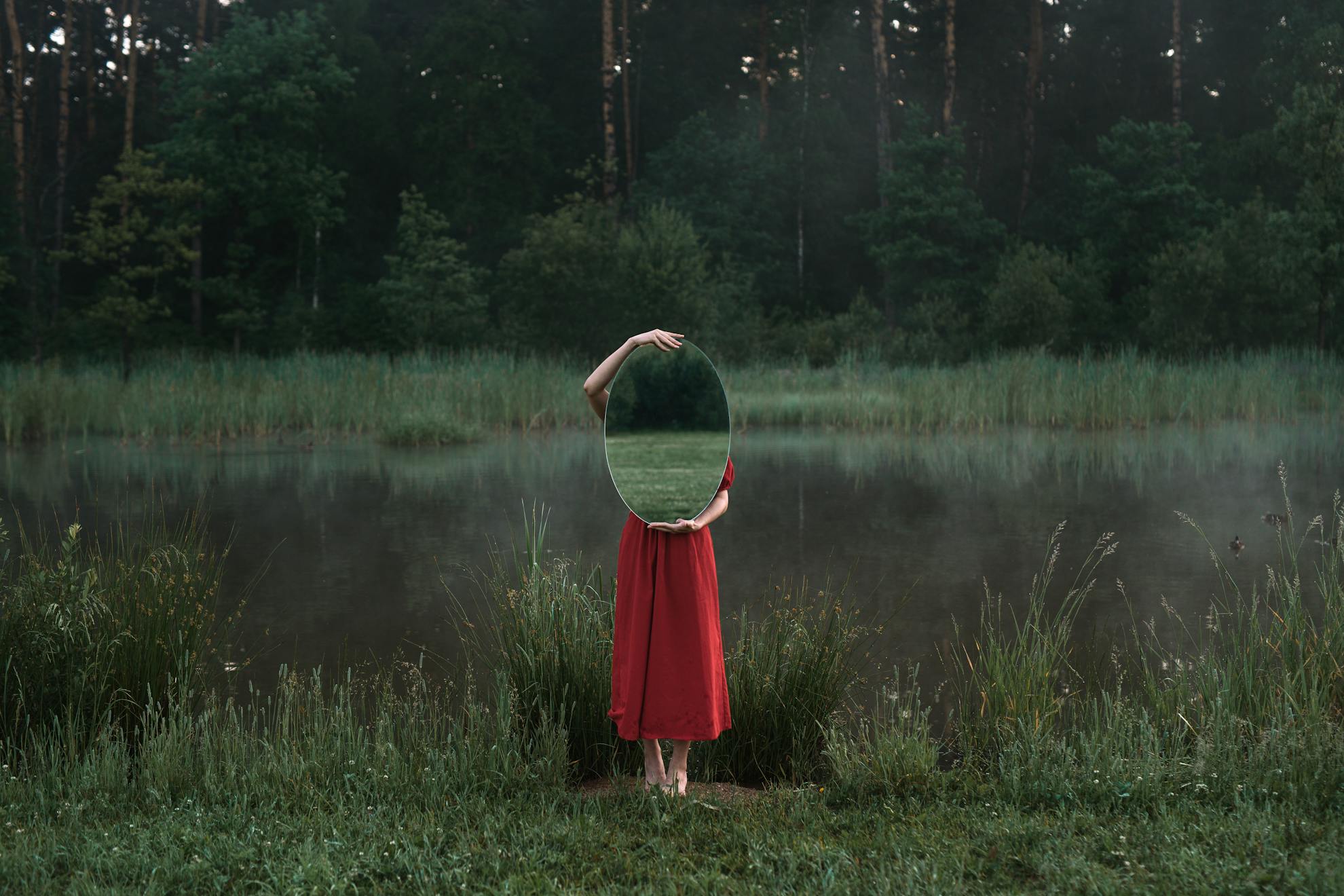
Desire thrives on the incomplete picture. We see the scene, not the story.
And when we mistake the scene for the whole truth, desire becomes distorted. It becomes a longing not for what something is, but for what we imagine it will feel like.
Desire is a moment, not a reality
Every desire rises as a single moment of perception. A flash of wanting. A projection of what we think is missing.
My adult gap year has taught me this more deeply than I expected. I’ve tried to be honest about the moments it’s been hard - the instability, the exhaustion, the ache for home. But honestly, I could scream it from the rooftops and people would still see only what they feel they lack: the freedom, the adventure, the escape. Desire always fills in the unseen parts with fantasy.
It’s the same as wanting abs. You see the outcome on someone else, not the early mornings, the missed dinners, the emotional discipline. Your longing is for the final image, not the lived experience underneath.
Nothing is ever what it seems - or if it is, it’s only for a short moment. Every desire is fleeting, a tiny spark in a wide sky. And if we can see it as just a spark, we begin to loosen its grip.
The samskāra behind the wanting
These illusions - these partial perceptions - are what keep us spinning in longing, comparison, and scarcity. The moment you think, “I want what they have,” you stop seeing what is already abundant in your own life. Safety. Freedom. Friendship. Love. Opportunities. Comfort. Choices. Things others may look at and long for, too.
This is the nature of samskāra: the deep subliminal impression that shapes the lens through which we see. We don’t desire from the present moment - we desire from old stories, old wounds, old programming. Desire isn’t about the object; it’s about the meaning we’ve layered onto it.
This is why gratitude is so powerful. It interrupts the samskāra. It shifts your awareness from lack to presence. It reminds you that you are already living inside a landscape full of blessings you once prayed for.
The moment-to-moment practice
Desire arises countless times a day - most of the time without us noticing. A quick mental comparison. A flash of wanting. A micro-jealousy. A moment of “why not me?”
These everyday moments reveal so much.
Yoga asks us not to suppress desire, but to slow down enough to observe it.
- What did that moment of wanting reveal about your inner world?
- What story did it trigger?
- What did it say about what you believe you lack?
- What does the desire symbolise that has nothing to do with the object itself?
Instead of chasing the desire, we explore it - gently, honestly, with curiosity.
This is the antidote.
Start with the desire that has driven you for years
There will always be one big desire.
The one that sits at the centre of your life.
The one you believe will change everything once it’s fulfilled.
Maybe it’s homeownership.
Maybe it’s financial freedom.
Maybe it’s a specific job, relationship, or identity.
Start there.
What does that desire mean to you?
What do you believe it will fix?
What story does it reinforce?
What wound does it point to?
What truth does it hide?
The desire isn’t the problem - the meaning you’ve attached to it is.
And sometimes this exploration can reveal the most liberating thing:
That you were never chasing the object.
You were chasing a feeling.
A story.
A sense of enoughness.
A version of yourself you didn’t know how to access otherwise.
And this is the freedom
When you start to see desire clearly, it stops controlling you.
It stops shaping your worth.
It stops defining your choices.
You begin to want differently - more gently, more truthfully.
Desire becomes less about filling a gap and more about honouring a quiet inner movement.
In the nondual tantric view, intuition is never loud.
It doesn’t argue.
It doesn’t justify.
It doesn’t bargain with the mind.
It simply rests within you - a subtle, steady pull towards what feels inherently right, without needing to explain why.
A deeper knowing that waits for you to become still enough to hear it.
This is the journey:
To soften the samskāras, loosen the old conditioning, clear the habitual noise - so that the quieter, truer voice within can finally rise to the surface.